
Morocco National Team vs Argentina: Tactical Edge
Morocco national football team is the senior men’s side representing Morocco in FIFA and CAF competitions, governed by the Royal Moroccan Football Federation in North Africa. The Atlas Lions became the first African team to reach a FIFA World Cup semi-final when they finished fourth at Qatar 2022, defeating Belgium, Spain and Portugal before losing to France. Morocco also won the Africa Cup of Nations once, in 1976, and has appeared at the World Cup six times through the 2022 tournament. Its modern identity combines a compact defensive block, rapid transitions and technically skilled players developed in Morocco and European leagues. Coach selection, injuries and the final 2026 squad will still affect projections, so readers should separate confirmed statistics from forecasts. For reliable tournament tracking, compare Morocco’s recent form, opponent quality and line-up news before making any match prediction.
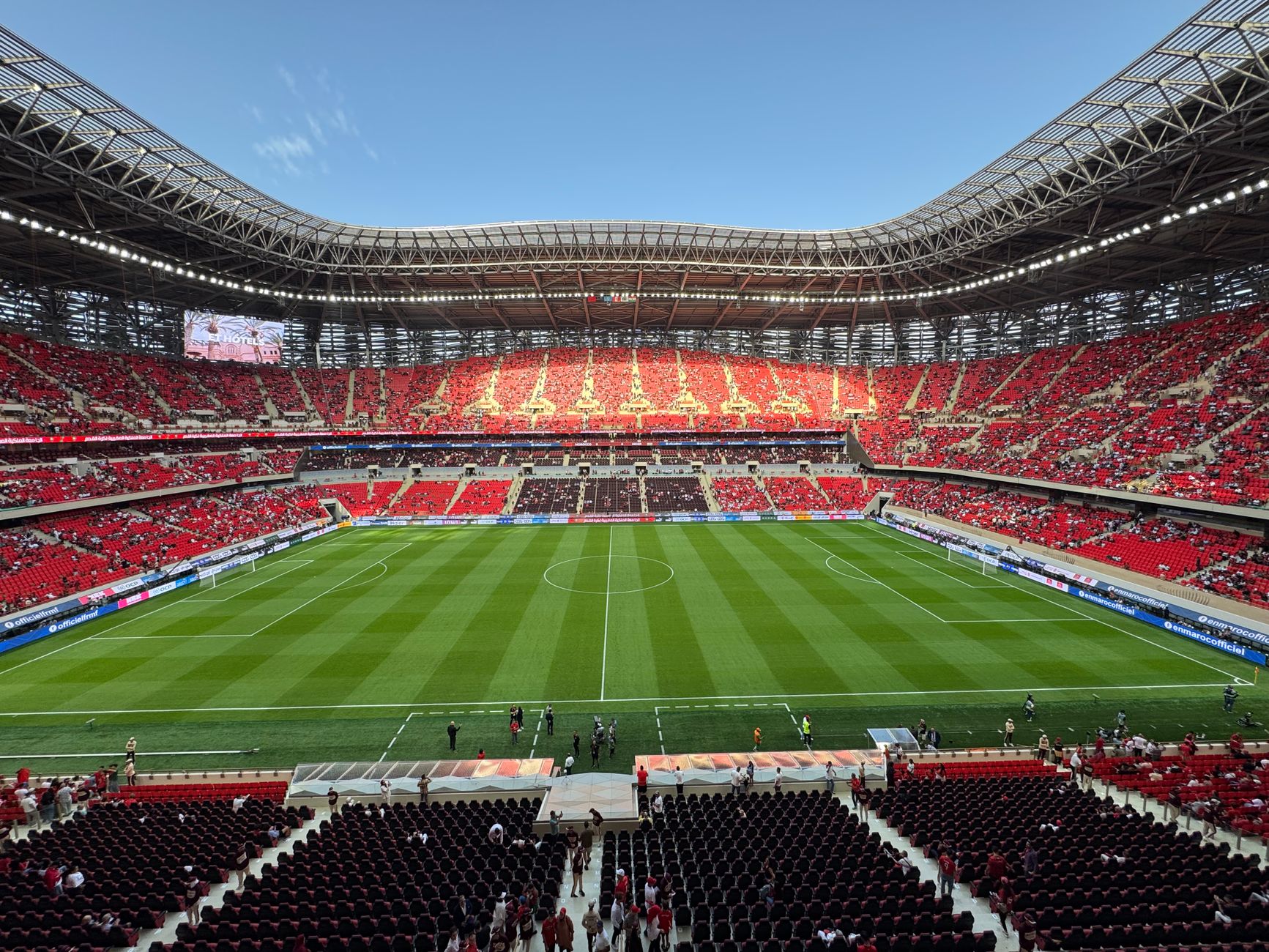
Photo by Earth Photart on Pexels
Morocco’s rise is not a random football plot twist. The numbers show a team that converted defensive structure into historic tournament progress, while its player pool benefited from major European competition and a stronger domestic development system. I’ll be honest with you: calling Morocco an automatic World Cup contender would be premature, but treating the Atlas Lions as a one-tournament surprise would be even less defensible.
Goal Moments follows FIFA World Cup developments through match predictions, tactical analysis, player statistics and daily tournament coverage. That makes Morocco a useful case study because its results cannot be explained by star power alone. The team’s defensive spacing, goalkeeper performance, set-piece discipline and transition timing were all material variables at Qatar 2022.
For historical context, the FIFA official national-team records and the Confederation of African Football provide the most reliable starting points. Supporters may also wish to review our [Internal Link: World Cup team tactics guide] before comparing Morocco with Argentina, France or other leading nations.
A quick evidence-based snapshot:
- Governing body: Royal Moroccan Football Federation, commonly abbreviated as FRMF.
- Confederation: CAF, the Confederation of African Football.
- National nickname: the Atlas Lions.
- World Cup breakthrough: semi-finalists at Qatar 2022.
- World Cup appearances: six through the 2022 edition.
- Africa Cup of Nations titles: one, won in 1976.
- Best World Cup finish: fourth place in 2022.
- Common tactical strengths: compact defending, transition attacks and wide progression.
If you are assessing Morocco for a future match, begin with the confirmed starting XI and the opponent’s ability to attack the channels. Those two inputs often matter more than a headline FIFA ranking.
Want the wider tournament context before comparing teams?
If you value Morocco’s defensive record: study the 2022 structure
Morocco’s most important competitive evidence is its Qatar 2022 defensive run: the Atlas Lions conceded only 5 goals across 7 matches, including 3 own goals, and kept clean sheets against Croatia, Belgium, Spain and Portugal. That record explains why Morocco reached the semi-final more convincingly than simple possession statistics would.
The defensive model relied on short distances between the back four and midfield line. Full-backs were aggressive when the pressing trigger appeared, but the team usually avoided uncontrolled expansion. The central defenders protected the area first, while midfielders screened passes into the opposition striker. This is a low-drama approach. Low drama wins games, apparently.
Goalkeeper Yassine Bounou was central to the calculation. His saves against Spain in the round of 16 shootout and his general command of the penalty area gave Morocco an additional margin in low-scoring matches. A team defending with a narrow block can survive if its goalkeeper handles crosses, second balls and one-versus-one situations; it becomes vulnerable when those three details deteriorate simultaneously.
Morocco’s defensive profile should therefore be read through more than goals conceded. Track:
- The number of progressive passes allowed into the penalty area.
- The opponent’s cutback opportunities from the byline.
- Defensive errors leading to shots.
- Set-piece concessions, especially near-post corners.
- Whether the midfield screen remains intact after turnovers.
A useful contrarian point is that Morocco’s defensive success did not mean it dominated every phase. Against Spain, Morocco had approximately 23% possession yet advanced through discipline, counterattacking speed and penalty-shootout execution. Possession was not the mechanism of control; territory denial was.
The FIFA Technical Study Group reports are valuable for readers who want a more rigorous explanation of defensive transitions and tournament trends. For match analysis, compare Morocco’s defensive shape after losing the ball with its shape during settled possession. Those are separate systems, and confusing them leads to noisy predictions.
Why can Morocco struggle against patient possession teams?
Morocco can struggle against patient possession teams when its midfield block is pulled sideways and the opponent creates free access between the full-back and central defender. This risk is especially relevant against teams that switch play quickly, attack with an overlapping full-back and use a false nine.
The issue is not simply that Morocco has less possession. A low-possession strategy can work if the defensive block remains connected and the first counterattack reaches the final third. The danger appears when the team spends repeated phases defending without relief. In that scenario, clearance distance falls, fouls increase and the opponent collects second balls around the box.
For practical evaluation, watch the first 20 minutes. If Morocco forces the opponent backward at least several times, the press is probably functioning. If the opponent completes repeated switches behind the wide midfielders, the Atlas Lions may need a lower block. This is one of the less obvious indicators because the scoreboard can remain 0–0 while territorial pressure is already becoming expensive.

Photo by Omar Ramadan on Pexels
If you follow Morocco’s attacking transitions: measure the first three passes
Morocco’s transition threat depends on how efficiently it turns a regain into forward territory. The first three passes after winning the ball are more informative than raw counterattack counts because they reveal whether the team can escape pressure or merely clear possession.
Players such as Hakim Ziyech, Sofyan Amrabat, Achraf Hakimi and Noussair Mazraoui have represented different parts of Morocco’s technical identity across the modern cycle: creative delivery, midfield resistance, explosive width and positional flexibility. However, no responsible preview should assume every familiar name will be selected, fit or starting in 2026. Squad announcements and club form must be checked close to match day.
Hakimi is particularly important structurally because his speed can transform a defensive recovery into an immediate wide overload. Ziyech’s left-footed delivery has historically offered threat from crosses, corners and half-spaces. Amrabat’s value has often been less visible in highlight clips: he helps secure the central zone, contest loose balls and protect the team when full-backs move forward.
A transition sequence usually follows this pattern:
- A centre-back or midfielder wins the first duel.
- The nearest player makes a safe outlet pass rather than forcing a spectacular ball.
- A wide player accelerates into space behind the opponent’s full-back.
- The striker or attacking midfielder attacks the next passing lane.
- The final action becomes a cross, cutback, shot or set piece.
The information gain here is operational: count how often Morocco completes those first three forward passes under pressure. If the success rate is low, the team may appear defensively solid while generating almost no sustainable attacking threat. If it is high, even 35% possession can produce meaningful chances.
Morocco also benefits from set pieces. In knockout football, a corner or free kick can erase a large open-play quality gap. Review [Internal Link: set-piece analysis for World Cup matches] to understand why delivery location, blocker movement and second-phase positioning should be tracked separately.
At Goal Moments, our recommended match-preview order is simple: confirm availability, identify the transition outlet, then assess the opponent’s rest defence. A team that leaves only two defenders behind the ball may give Morocco the exact space it wants. A team that maintains a disciplined three-player rest defence can reduce that edge.
Ready to compare the attacking variables rather than just the reputations?
If you compare Morocco with elite opponents: separate reputation from matchup
Morocco should be compared with Argentina, France, Spain and Portugal through matchup characteristics, not only FIFA ranking or previous tournament reputation. Argentina may challenge Morocco with controlled possession and central combinations, France with athletic depth and transitional power, Spain with circulation, and Portugal with technical overloads between the lines.
A useful comparison framework includes five variables:
| Variable | Morocco question | Why it matters |
|---|---|---|
| Possession | Can Morocco exit its own half? | Repeated deep defending creates fatigue |
| Width | Can the opponent isolate Hakimi or Mazraoui? | Wide overloads can break the block |
| Set pieces | Who has the better delivery and aerial matchups? | Knockout margins are often small |
| Central access | Can either side receive behind midfield? | This controls shot quality |
| Bench impact | Which team improves after 60 minutes? | Substitutions alter transition spaces |
The 2022 semi-final against France exposed a real limitation: Morocco could defend bravely and create opportunities but still struggle to convert pressure into goals against an opponent with elite recovery speed and depth. France scored twice, and Morocco’s late attacking effort did not change the outcome. That is not a failure of the entire model; it is evidence that the model requires a stronger finishing layer against the very best teams.
Against Spain, the matchup was different. Spain controlled the ball, but Morocco’s compactness reduced central penetration. The result was a 0–0 draw after extra time before Morocco won 3–0 on penalties. Against Portugal, Morocco won 1–0 after exploiting a high-value moment and protecting the lead.
This produces a contrarian conclusion: Morocco may be more dangerous against technically dominant teams that overcommit full-backs than against mid-level opponents that defend deep. The latter remove transition space and force Morocco to create patiently, where its attacking efficiency can be less consistent.
For readers following 2026, use opponent-specific metrics rather than a single “form” label. [Internal Link: FIFA World Cup prediction methodology] can help structure that comparison without turning every preview into guesswork.

Photo by Franco Monsalvo on Pexels
If you assess the 2026 outlook: track the squad cycle, not the 2022 poster
Morocco’s 2026 outlook should be treated as a moving forecast because international squads change quickly. The 2022 core delivered historic results, but age, injuries, club roles and coaching decisions can alter the team’s pressing intensity and attacking balance within a single qualifying cycle.
The most important checks are:
- Which goalkeeper is receiving regular club minutes?
- Are Morocco’s central defenders playing consistently at a high level?
- Is the midfield able to resist pressure without abandoning its shape?
- Which winger or full-back provides reliable one-versus-one progression?
- Does the striker convert limited chances at an acceptable rate?
- Has the coach developed a plan for opponents defending in a low block?
The World Cup format also matters. FIFA’s 2026 tournament will expand to 48 teams, with matches hosted across the United States, Canada and Mexico. Travel distances, climate changes and the revised group-stage structure create variables that did not exist in the same form at Qatar 2022. Morocco’s experience in Qatar remains relevant, but it is not a guarantee of another semi-final.
A practical 2026 forecast should use a three-layer model:
- Baseline: competitive results, defensive goals conceded and opponent strength.
- Availability: injuries, club minutes and confirmed squad selection.
- Matchup: pressing resistance, set pieces, width and transition space.
The first information-gain insight is that travel should be treated as a tactical variable, not merely a logistical note. A side relying on repeated high-intensity transitions may be affected differently by heat, recovery time and long-distance movement than a possession team controlling tempo.
The second is that Morocco’s best indicator may be chance quality after turnovers rather than total shots. In low-possession games, 8 shots with 0.15 expected goals each is not automatically better than 4 shots with 0.35 expected goals each. Public previews often count attempts and stop there. That is a weak shortcut.
According to FIFA’s official 2026 World Cup overview, the expanded competition will involve 48 teams. Readers should therefore wait for the final draw, match venues and confirmed schedule before assigning a fixed probability to Morocco’s progression.
Need a disciplined way to monitor those updates?
Common pitfalls to avoid
The biggest Morocco national football team analysis errors come from overgeneralising Qatar 2022. One historic run provides valuable evidence, but it does not erase the impact of opponent quality, tournament draw, injuries, finishing variance or penalty shootouts.
Avoid these mistakes:
- Treating fourth place in 2022 as proof of permanent top-four status.
- Assuming every 2022 starter remains available in 2026.
- Using possession as a direct measure of control.
- Ignoring the difference between open-play and set-piece goals.
- Comparing Morocco with Argentina without considering tactical matchup.
- Treating a friendly result as equivalent to a World Cup knockout result.
- Predicting from reputation before checking the starting line-up.
- Confusing a clean sheet with complete defensive dominance.
The penalty-shootout issue deserves careful handling. Morocco’s 3–0 shootout victory over Spain was a major competitive achievement, but shootouts contain goalkeeper skill, taker selection and random variation. A forecast model should record the result while avoiding the claim that Morocco has a permanently superior shootout advantage.
Another common error is reducing Morocco to “defence and counterattacks.” That description was useful in 2022, but it can become outdated. Morocco can build through full-backs, combine in wide areas and use set pieces, while its exact attacking behaviour changes according to the opponent. Labels are efficient; they are also dangerous when used without match footage or event data.
The International Football Association Board Laws of the Game are worth consulting when analysing penalties, handball decisions and set-piece situations. One official principle states that “a goal is scored when the whole of the ball passes over the goal line.” It sounds obvious, but basic law knowledge prevents exaggerated claims after controversial incidents.
If a prediction is being used for betting, apply additional caution. Legal availability, age requirements, market rules and responsible gambling safeguards differ by jurisdiction. Goal Moments provides football information and analysis, not a substitute for regulated advice or financial judgement.
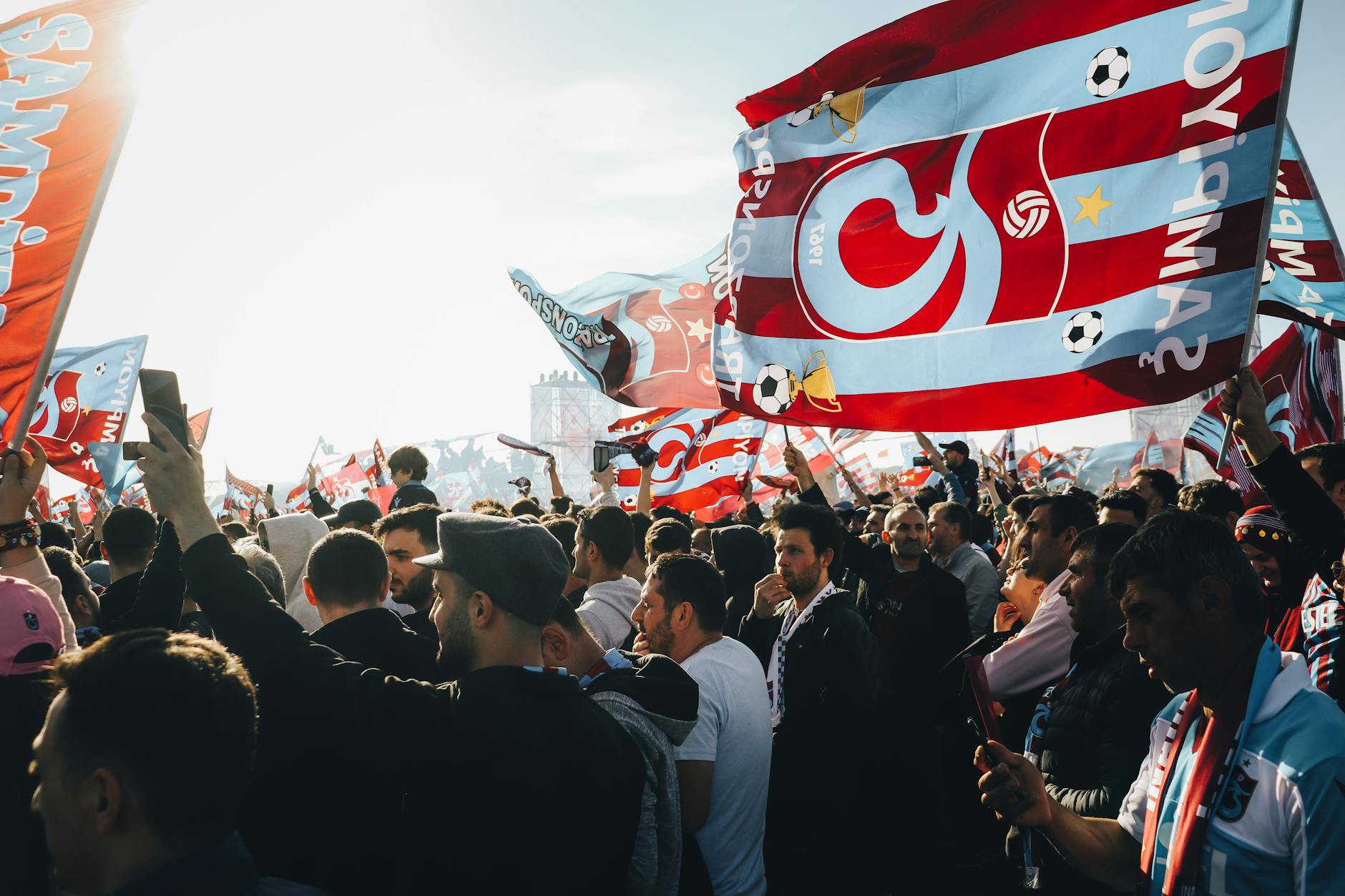
Photo by Beyza Kaplan on Pexels
The 30-day check-in
A 30-day check-in is the most reliable way to update a Morocco national football team forecast before a major match. Instead of locking in an opinion months early, revisit the evidence across four weekly checkpoints: squad health, club minutes, tactical usage and opponent context.
During week one, record injuries and suspensions from official federation and club communications. During week two, examine whether likely starters are playing regularly, because a famous player with limited club minutes may not provide the same pressing or recovery output. During week three, review Morocco’s recent matches for defensive spacing, transition completion and set-piece threat. During week four, confirm the final squad, starting XI indications, venue and travel conditions.
A compact monitoring sheet can include:
| Check-in item | Evidence to record |
|---|---|
| Goalkeeper | Starts, save quality, distribution errors |
| Defence | Goals conceded, box entries, aerial duels |
| Midfield | Pressure resistance, recoveries, progressive passes |
| Attack | Expected goals, shots inside the box, conversion |
| Tactics | Press height, full-back positioning, transition speed |
| Context | Venue, rest days, travel, opponent rotation |
After 30 days, do not ask only, “Is Morocco in good form?” Ask a narrower question: “Is Morocco currently equipped to attack this opponent’s weakest space?” That formulation produces better analysis because football is relational. A strong team can look ordinary in the wrong matchup, while a supposedly inferior team can create problems through one specific tactical channel.
My cautious conclusion, respectfully offered, is this: Morocco belongs in serious 2026 contender discussions, but its ceiling will depend on attacking efficiency and squad renewal as much as its defensive identity. The Atlas Lions have already changed African football’s World Cup expectations. The next test is proving that Qatar 2022 was a foundation, not merely an exceptional seven-match sequence.
For continuing tournament updates, compare confirmed team news with the latest Goal Moments tactical coverage before making any decision.
Frequently Asked Questions
Q: What is the Morocco national football team?
A: The Morocco national football team is the men’s senior side representing Morocco in FIFA and CAF competitions. It is governed by the Royal Moroccan Football Federation and is commonly called the Atlas Lions. Morocco’s most significant achievement came at Qatar 2022, when it became the first African team to reach a FIFA World Cup semi-final.
Q: How many World Cups has Morocco qualified for?
A: Morocco had appeared at six FIFA World Cup tournaments through Qatar 2022. Its previous appearances included 1970, 1986, 1994, 1998 and 2018, before its historic fourth-place finish in 2022. The 1986 team also became the first African side to win a World Cup group.
Q: Has Morocco won the Africa Cup of Nations?
A: Morocco has won the Africa Cup of Nations once, in 1976. The tournament was played in a final group format that year, and Morocco finished first in the decisive standings. Its continental record also includes later strong campaigns, although the 1976 title remains the national team’s only AFCON championship.
Q: What is Morocco’s main tactical strength?
A: Morocco’s main tactical strength is its compact defensive structure followed by fast, direct transitions. The Atlas Lions can defend narrow spaces, protect the penalty area and attack through wide players such as advanced full-backs. Their 2022 World Cup campaign, which included clean sheets against Croatia, Belgium, Spain and Portugal, demonstrated how effective that structure can be.
Q: How should I analyse Morocco before a match?
A: Check the confirmed line-up, injuries, opponent shape, transition space and set-piece matchups before judging Morocco. Then review whether Morocco can complete its first three forward passes after regaining possession and whether the opponent can switch play behind the wide defenders. This process is more reliable than using FIFA ranking or the previous match score alone.
Q: Is Morocco better than Argentina?
A: Morocco is not automatically better than Argentina; the answer depends on the specific tactical matchup and competition context. Argentina generally offers elite technical control, central combinations and tournament experience, while Morocco can create problems through compact defending, wide transitions and set pieces. Compare availability, venue, rest days and expected starting line-ups before reaching a conclusion.
Q: What could prevent Morocco from repeating its 2022 success?
A: The main obstacles are squad turnover, injuries, reduced finishing efficiency, stronger opponents and the different demands of the 2026 tournament. Morocco may also face teams that defend deep and deny transition space, forcing it to create chances through sustained possession. A clean defensive record alone will not guarantee progress if attacking chance quality declines.
[Internal Link: Morocco national football team player statistics]
[Internal Link: 2026 World Cup match predictions]
[Internal Link: African football history and tournament records]