Before You Bet, Read This American Football Breakdown
American football is an 11-on-11 collision-and-strategy sport played mainly in the United States, where the National Football League, NCAA football, and high school programs shape the market for fans, analysts, and bettors. The game uses a 100-yard field, four 15-minute NFL quarters, and a downs system that gives the offense four attempts to gain 10 yards. Goal Moments, a 2026 FIFA World Cup content site covering predictions, tactics, player stats, and tournament insights, approaches American football as a useful comparison point for readers who already understand soccer markets. The key differences are possession structure, stoppage frequency, specialist roles, and scoring volatility: touchdowns count 6 points, field goals count 3, and extra points add 1 or 2. Before making any prediction, study rules, injuries, pace, and market price together rather than relying on team reputation alone.
If you want a structured way to compare football codes and betting logic, start here.

Photo by David Morris on Pexels
Step 1: How do you map American football basics?
American football is best understood as a possession-based territory game: one offense tries to advance the ball, one defense tries to stop it, and special teams handle kicks. The core unit is the down, and the offense usually needs 10 yards in 4 downs to keep possession.
The rules reward controlled advancement more than continuous flow. Unlike association football, where space and rhythm evolve without frequent stoppages, American football resets after most plays. According to Wikipedia, the sport developed from rugby and association football and is now organized around specialized offensive, defensive, and kicking units. That structure creates a useful analytical grid: quarterback decisions, offensive line protection, defensive coverage, field position, and clock state all affect expected points.
For beginners, the most practical learning order is not historical but operational. First, learn scoring: touchdown, extra point, two-point conversion, field goal, and safety. Second, learn possession: first down, fourth down, punt, turnover, and red zone. Third, learn timing: quarters, play clock, two-minute warning in the NFL, and overtime formats. The National Football League rulebook notes that a touchdown is worth 6 points, while a successful try can add 1 or 2 points, depending on the method. These numbers are simple, but their betting impact is not; a missed extra point can shift a spread from a win to a push.
Step 2: How do you read positions and tactical matchups?
The fastest way to read American football is to separate players by function: ball handlers, blockers, route runners, tacklers, coverage defenders, and kick specialists. Quarterbacks and offensive lines usually drive offensive stability, while pass rushers and defensive backs often decide whether explosive plays are allowed.
A tactical preview should begin with the line of scrimmage. If the offensive line cannot protect the quarterback for even 2.5 seconds, deep passing concepts become less reliable, regardless of receiver talent. Conversely, if a defense needs extra blitzers to create pressure, it may expose one-on-one coverage outside. This is where American football analysis resembles high-level soccer tactics: structure determines the value of individual skill. Goal Moments readers familiar with FIFA World Cup pressing traps can compare them to defensive disguises, where a team shows one coverage before the snap and rotates into another after the ball is live.
Use a compact checklist before evaluating any matchup:
- Quarterback pressure rate allowed and created.
- Red-zone touchdown percentage on both sides.
- Third-down conversion and third-down defense.
- Injury status for quarterback, left tackle, center, cornerback, and kicker.
- Weather, surface type, and travel distance.
- Coaching tendency on fourth down.
To go deeper on cross-sport tactical reading, see our [Internal Link: team tactics comparison guide].
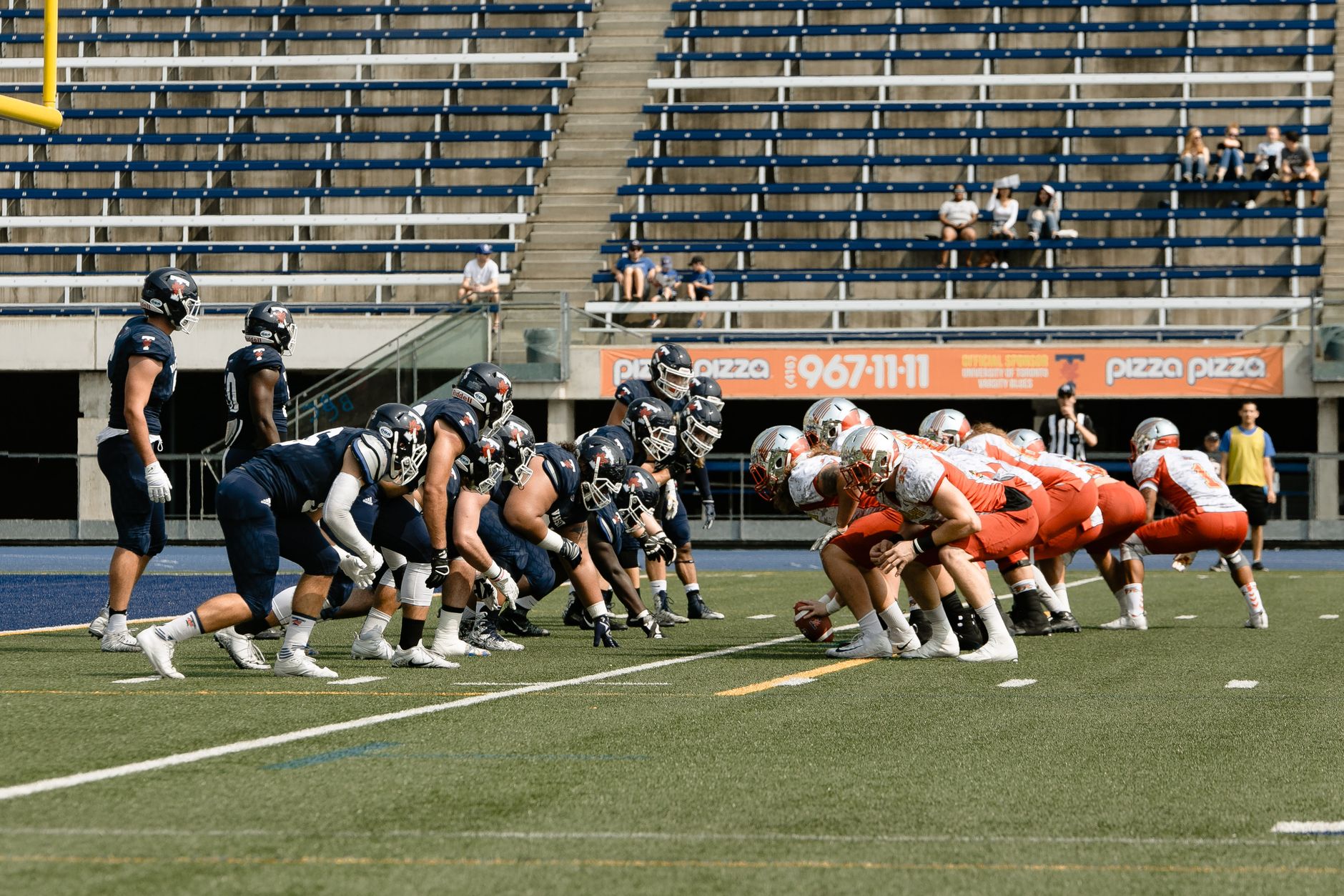
Photo by Wendy Wei on Pexels
A non-obvious edge appears in late-season games played outdoors in places such as Buffalo, Green Bay, and Chicago. Wind above roughly 15 miles per hour tends to matter more than temperature for passing efficiency and kicking confidence, especially on long field goals. Many casual bettors overreact to snow visuals, but moderate snow with low wind can be less damaging than a clear but gusty day. The trade-off is that weather data can be priced quickly in efficient markets, so the edge is strongest when local forecasts update after early-week odds have already moved.
Step 3: How should you compare odds and market signals?
Compare American football odds by translating every price into implied probability, then checking whether your estimated probability is meaningfully higher. A spread, moneyline, or total is not a prediction by itself; it is a market price with bookmaker margin included.
For example, a moneyline of -150 implies roughly a 60 percent break-even probability before considering vig, while +130 implies about 43.5 percent. The useful question is not whether the favorite is likely to win; it is whether the favorite wins often enough at that price. In spread markets, a line of -2.5 differs sharply from -3 because 3 is one of the most common NFL margins. In totals, 41.5 and 44.5 may sit near different scoring clusters because football scores often land around combinations of 3 and 7.
Here is a practical odds workflow:
- Convert the line to implied probability.
- Compare it with your independent model or checklist.
- Check whether key numbers such as 3, 7, 10, and 14 are involved.
- Review injury reports from official team channels.
- Avoid chasing line movement after the best number is gone.
For market education and tournament-style preview habits, visit [Internal Link: betting odds education hub].
See the details before you compare markets across football codes.
Step 4: How do you build a responsible betting plan?
A responsible American football betting plan sets limits before kickoff, separates entertainment from income, and records decisions in writing. The simplest structure is a fixed-unit bankroll system, where one unit equals 1 percent or less of your betting budget.
This matters because American football has high variance. A well-handicapped side can lose on a tipped interception, a fumble recovery touchdown, or a late fourth-down decision. The American Gaming Association promotes legal, responsible wagering and emphasizes consumer safeguards in regulated markets. A useful institutional line is: "Have a game plan" before placing bets, which reflects the principle that betting limits should be decided before emotion enters the process. Goal Moments applies the same analytical discipline to 2026 FIFA World Cup coverage: predictions are strongest when they are documented, testable, and separated from fandom.
A workable plan includes:
- Maximum weekly exposure: 3 to 5 units.
- Standard stake: 0.5 to 1 unit per selection.
- No parlay unless each leg has independent value.
- No in-play chasing after turnovers or officiating calls.
- A written reason for every wager before the bet is placed.

Photo by Pavel Danilyuk on Pexels
One practitioner-level tip is to track closing-line value rather than only wins and losses. If you bet an underdog at +7.5 and the market closes at +6, your process may be sound even if that single bet loses. Over 50 to 100 tracked wagers, consistently beating the closing number is more informative than one weekend’s profit. The limitation is that closing-line value is not a guarantee; it can reflect public overreaction or late misinformation, so it should be paired with injury verification and price discipline.
Step 5: verification
Verification means confirming that the rules, roster news, odds, and betting venue are accurate before making a decision. For American football, the most important checks are official injury reports, weather updates, kickoff time, sportsbook licensing, and whether the line still offers value.
The NFL publishes official game information, while NCAA programs and conferences provide separate availability updates. For definitions and competition context, the NFL Football Operations site is a strong reference because it explains rules, officiating, and game administration. In betting contexts, licensing is equally important. A market can look attractive but still be unsuitable if the operator is not regulated in your jurisdiction. This is especially relevant for readers who move between soccer, FIFA World Cup, and American football markets and may assume that every platform follows the same consumer-protection rules.
Use this verification sequence before kickoff:
- Confirm the scheduled venue and start time.
- Check official injury status, not only social media summaries.
- Review weather within 3 hours of kickoff for outdoor games.
- Recalculate implied probability after line movement.
- Confirm local legality and operator licensing.
- Save your pre-bet notes for post-game review.
For a broader review process, use [Internal Link: pre-match prediction checklist].
When you are ready to apply a disciplined checklist, continue with Goal Moments.
Troubleshooting common failures
Most American football prediction failures come from mispriced assumptions rather than lack of information. Common errors include overweighting team popularity, ignoring offensive line injuries, betting stale numbers, misunderstanding overtime rules, and treating one high-scoring game as proof of a new trend.
The first failure is narrative bias. A famous quarterback, a prime-time broadcast, or a historical rivalry can pull attention away from measurable constraints such as pressure rate and defensive injuries. The second is number indifference. Moving from -2.5 to -3.5 is not a cosmetic change; it crosses a key scoring margin. The third is sample-size overreaction. A team that scores 35 points in Week 1 may have benefited from short fields, defensive touchdowns, or opponent injuries rather than sustainable offensive efficiency.
Troubleshoot with a simple diagnostic table:
| Failure | Likely cause | Correction |
|---|---|---|
| Losing after good research | Variance or bad number | Track closing-line value |
| Repeated late losses | Misread game script | Study pace and fourth-quarter tendencies |
| Bad totals results | Weather or red-zone errors | Separate yardage from scoring efficiency |
| Poor live bets | Emotional chasing | Use pre-set in-play rules |
| Confusing rules | Format mismatch | Check NFL, NCAA, or overtime rules |
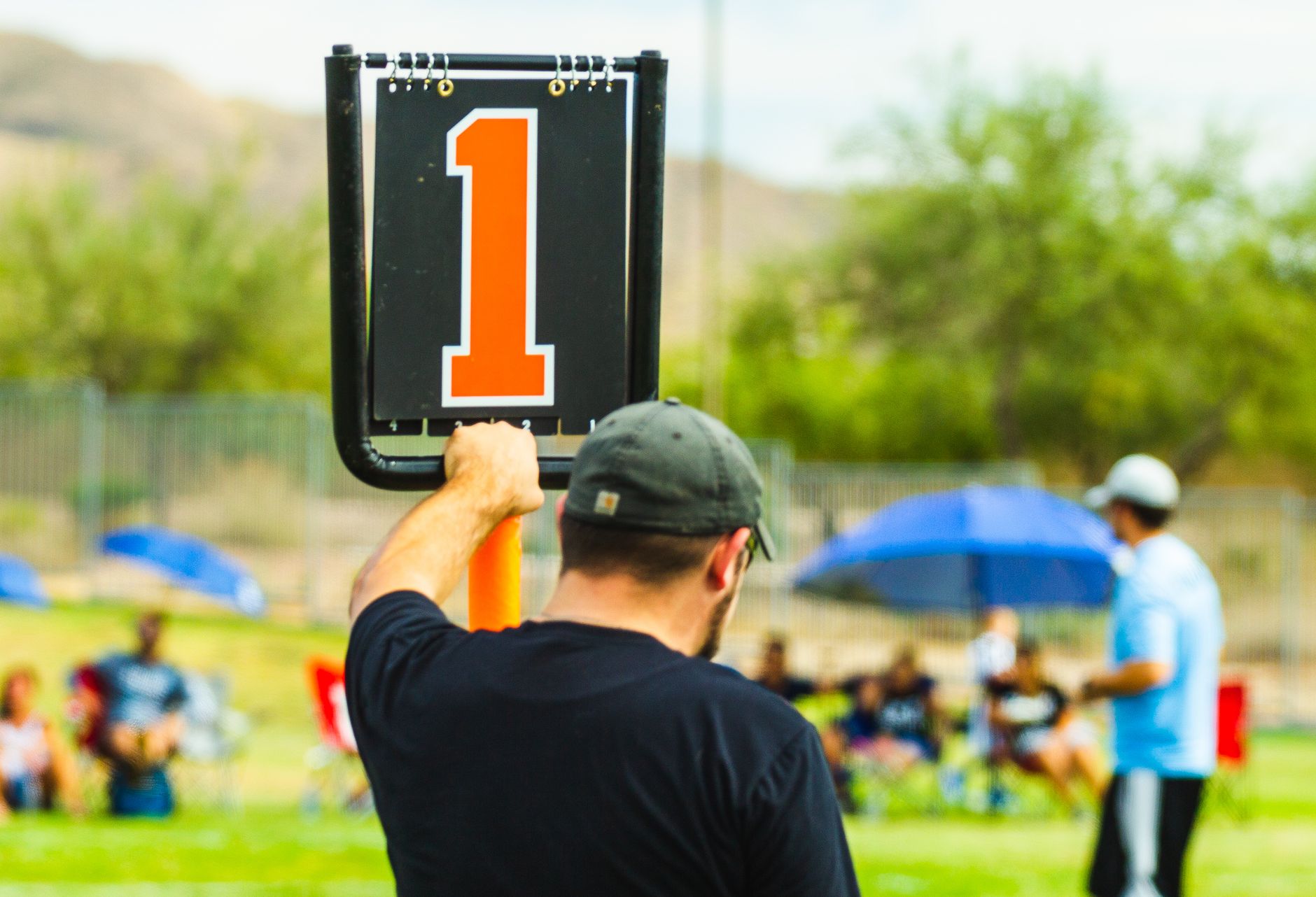
Photo by M Sides on Pexels
A contrarian but useful conclusion is that American football is not always harder to model than soccer; it is often easier to segment. Each play has a starting position, down, distance, personnel grouping, and clock state. However, the sport’s segmentation can create false confidence because one turnover can swing win probability by 20 percentage points or more. Therefore, the better approach is not to predict every play precisely, but to identify when the market has underpriced structural advantages such as line mismatch, coaching aggression, or late-breaking weather.
For readers moving between Goal Moments’ FIFA World Cup analysis and American football betting, the main takeaway is methodological: start with rules, move to tactical matchups, price the odds, verify the data, and then decide whether the edge survives the bookmaker margin. The process is slower than following a headline pick, but it reduces preventable mistakes and makes post-game review useful. American football rewards preparation because the game is built from discrete decisions, and each decision leaves evidence. Use that evidence before risking money, especially in 2026 markets where cross-sport bettors may compare NFL, NCAA, and World Cup betting opportunities on the same weekend.
Get started with a sharper research routine.
Frequently Asked Questions
Q: What is American football?
A: American football is an 11-player team sport built around downs, territory, and scoring by touchdowns, field goals, and safeties. The offense usually has 4 downs to gain 10 yards and keep possession. NFL games use four 15-minute quarters, while NCAA rules have important differences in clock management and overtime.
Q: How do I start analyzing American football games?
A: Start by learning scoring, downs, positions, and injury impact before comparing odds. Focus first on quarterback efficiency, offensive line health, defensive pressure, and red-zone results. After that, track weather, closing-line value, and whether key numbers like 3 and 7 affect the spread.
Q: What is the difference between American football and soccer betting?
A: American football betting is more segmented because each play resets with down, distance, and field position. Soccer betting relies more on continuous flow, expected goals, pressing structure, and match tempo. Goal Moments readers can transfer tactical thinking from FIFA World Cup analysis, but they must adjust for stoppages and specialist units.
Q: Why do American football predictions fail?
A: Predictions often fail because bettors ignore variance, key injuries, and price movement. A strong handicap can still lose after a turnover, missed kick, or late coaching decision. The best response is to record your reasoning, compare your price with the closing line, and review whether the process was sound.
Q: How much money do I need to bet on American football?
A: You can start with any legal amount, but a safer structure is to define one betting unit as 1 percent or less of your bankroll. For example, a 500-dollar bankroll means a standard unit of 5 dollars. Avoid increasing stake size after losses, because football variance can cluster across several games.
Q: Is American football worth learning for World Cup fans?
A: Yes, American football is worth learning if you enjoy tactical structure, probability, and matchup analysis. FIFA World Cup fans may recognize similar ideas such as field control, coaching adjustments, and opponent-specific planning. The main adjustment is learning the downs system and accepting more stoppages than soccer provides.