
Ball Mastery vs Fitness: Best Football Drills
The best football training drills combine technical repetition, decision-making, speed, strength and recovery rather than isolating fitness from ball work. Goal Moments presents this practical guide for football and soccer players worldwide, from youth teams in England and the United States to recreational players preparing for 2026 matches. A balanced session can use 10 minutes of ball mastery, 15 minutes of passing, 15 minutes of finishing and 10 minutes of sprint or agility work. The FIFA 11+ programme, developed for injury prevention, is commonly structured around a 20-minute warm-up and progressive running, strength and balance exercises. Footballers should also track useful measures such as successful passes out of 20, first-touch errors, 10-metre sprint time and shots on target. Start with two or three drills, record your baseline, then repeat them three times weekly for 30 days.
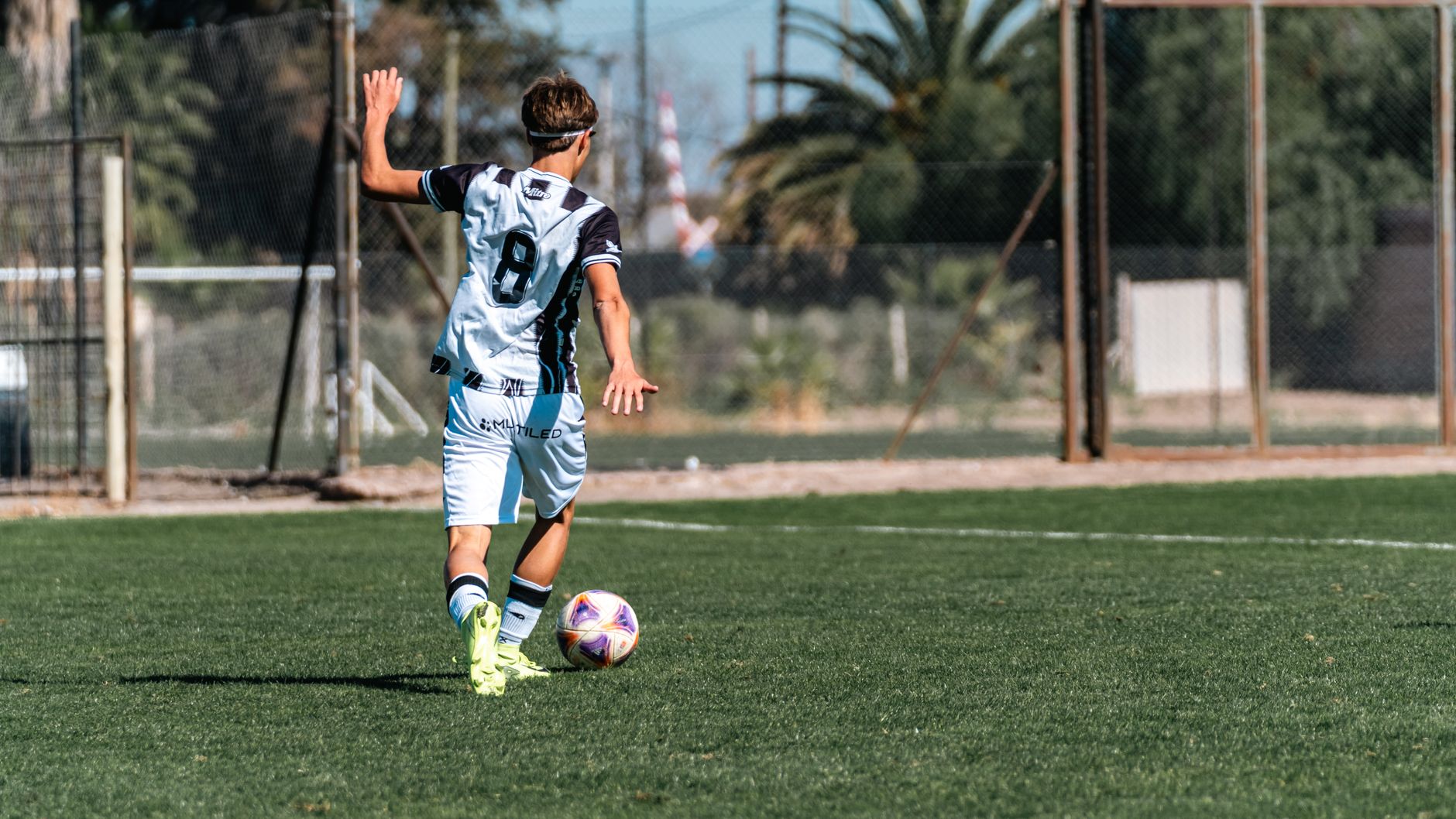
Photo by Franco Monsalvo on Pexels
Football training is often treated like a collection of random exercises. That approach looks busy, but the numbers usually remain stubbornly flat. If you are asking which football drills improve performance fastest, the honest answer is that the best selection depends on your position, current level, available space and measurable weakness. A winger who loses possession under pressure needs a different sequence from a centre-back who struggles with first-step acceleration. Goal Moments focuses on evidence-led football analysis, so the useful question is not “Which drill is fashionable?” It is “Which action fails most often in my matches, and how can I reproduce it under controlled pressure?” Before every session, choose one technical target and one physical target. For example, complete 16 of 20 passes with your weaker foot and reduce your 10-metre sprint time by 0.1 seconds. That simple structure makes improvement visible instead of relying on vague feelings after training.
Want a broader football performance perspective before you begin?
If you lack close control: start with ball-mastery drills
Close-control drills are the best starting point when a player miscontrols passes, needs too many touches or cannot protect the ball in tight areas. Use a 5-by-5-metre square, work for 30 seconds per movement, and complete three rounds with 30 seconds of rest. The core sequence should include inside-inside touches, outside-outside touches, sole rolls, V-pulls, foundations and alternating toe taps. Begin at 60 to 70 percent speed so the ball stays within one metre, then increase tempo only after completing at least 90 percent of repetitions cleanly. This method develops ankle mobility, coordination and familiarity with both feet. The FIFA Training Centre provides technical resources that similarly emphasise purposeful repetition and game-related movement. “The ball is the most important piece of equipment,” is the practical principle behind this work, even though the exact drill must still match the player’s role and age.
The most useful progression is not simply performing the same touches faster. Add a visual or directional cue after the first round: call “left,” “right,” “turn” or “stop,” then require the player to execute the action within two seconds. This introduces perception and decision-making, which are often missing from isolated cone routines. A 2024 review in the Journal of Sports Sciences examined the value of representative practice in sport and supports the broader coaching principle that drills become more transferable when they resemble match information. Record errors rather than only repetitions. If a player completes 180 touches but loses control 22 times, the useful figure is an 87.8 percent clean-touch rate. Aim to raise that number to 94 percent before making the square smaller or adding a passive defender.
- Foundations: Alternate inside-foot touches for 30 seconds, keeping knees bent.
- V-pulls: Drag the ball back with the sole, then push diagonally forward.
- Inside-outside touches: Use one foot to move the ball across and away.
- Turn on command: Receive a cue, scan over the shoulder and exit at an angle.
- Pressure finish: Complete five touches, then accelerate three metres out of the square.
To learn the technical basics in a more structured sequence, use this [Internal Link: beginner football skills guide]. Please keep the intensity appropriate for the player’s age and surface. On artificial turf, repeated high-speed sole rolls can irritate the ankle if the footwear is unsuitable; on wet grass, the ball may travel 10 to 20 percent farther after a firm touch. Those details sound minor, but they explain why a drill can appear successful on one day and collapse during a match. The useful habit is to vary the final touch, change direction and finish every repetition with an action that resembles football: pass, carry, turn or accelerate.
If you misplace passes: use passing and receiving circuits
Passing and receiving circuits are most effective when they train the first touch, body orientation and next action together. A four-player diamond covering 8 to 12 metres per side works well for beginners and intermediate players, while advanced groups can extend the distances to 15 metres. Player A passes to B, B opens the body and plays to C, C sets the ball for D, and D switches the sequence. Complete four sets of 90 seconds, with a 45-second recovery between sets, and count accurate passes rather than total attempts. The target should be at least 85 percent accuracy for a developing player and 92 percent for an advanced player working without defensive pressure. According to The FA England, effective technical practice should connect the skill to decision-making, movement and the demands of the game.
The first-touch rule creates the main improvement. Receive across the body when the next pass goes forward, receive with the back foot when pressure comes from the passing side, and use the sole only when the situation allows a genuine pause. Add a mannequin or passive defender after two rounds, then allow the defender to intercept during the final round. A practical information-gain test is the “two-touch pressure count”: over 20 possessions, record how often the player completes a first touch and pass within three seconds. Many players discover that their passing accuracy remains above 90 percent in a static circle but falls below 70 percent when the defender can close space. That gap is the training priority. It is not a character flaw; it is a stimulus mismatch.
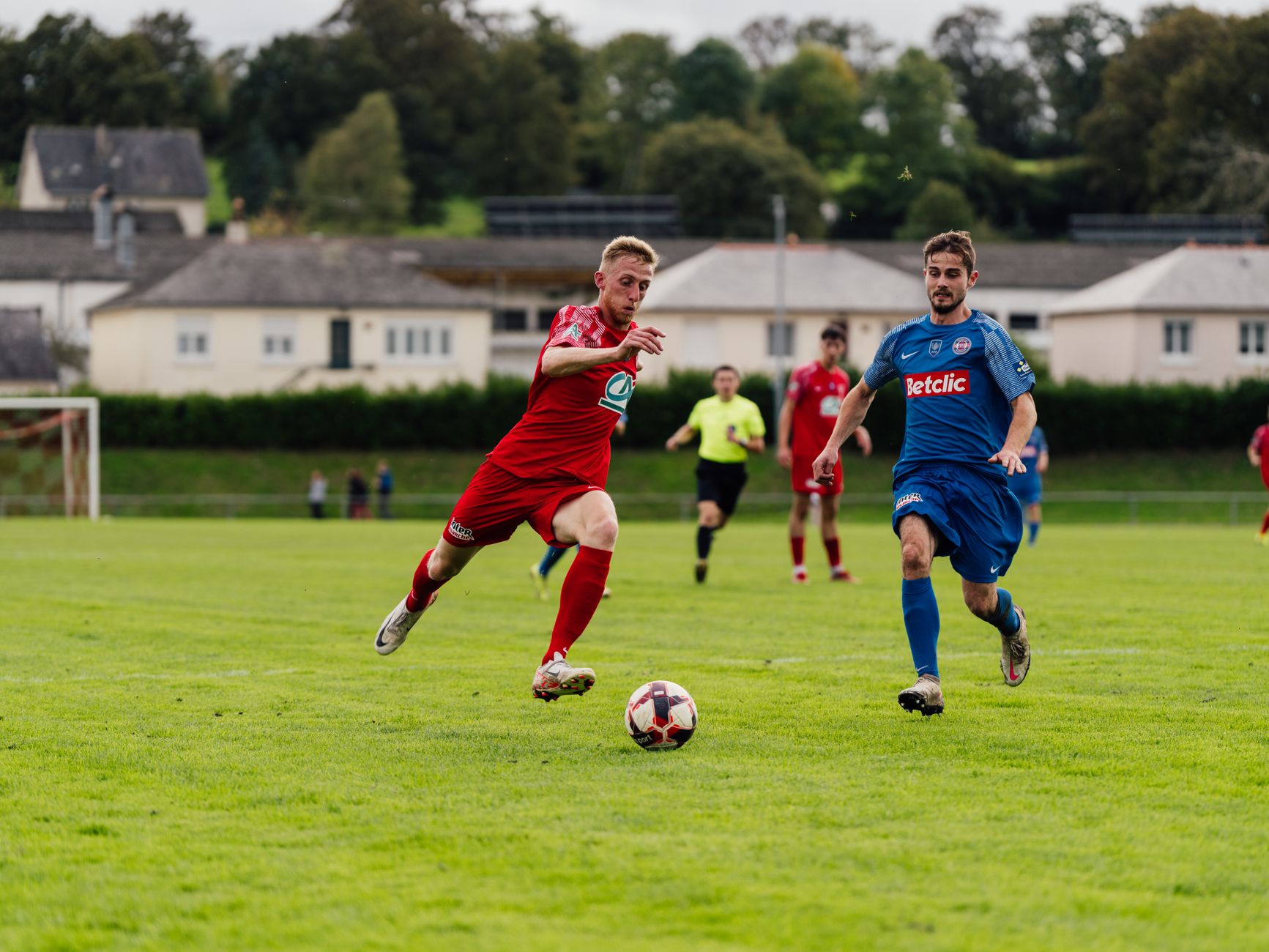
Photo by Bechir Lachiheb on Pexels
A strong passing session should also include wall passes, one-touch combinations and longer switches. Use the following structure for 35 to 45 minutes:
- 8 minutes: Two-touch passing at 8 metres, alternating feet.
- 8 minutes: Receive across the body and play forward at 10 metres.
- 10 minutes: Third-player combination around a mannequin.
- 8 minutes: One-touch passing with a 12-second possession limit.
- 5 minutes: Long pass into a target zone measuring 3 by 5 metres.
- 5 minutes: Competitive test, with one point for a clean forward reception.
If the player is under 12, reduce the distance and prioritise coordination over speed. If the player is returning from an ankle, knee or groin problem, remove one-touch pressure and keep the pass count below the level that causes technical breakdown. The UEFA Training Ground contains coaching material showing why technical quality must remain central even when sessions become physically demanding. For your own tracking, log attempts, successful passes, forward receptions and errors under pressure. Goal Moments readers following team tactics can then connect this training data with match patterns, such as whether a midfielder receives between lines or turns back toward the defensive goal.
Would you like to compare technical work with tactical demands?
If you create chances: combine finishing with movement
Finishing drills should reproduce the three events that precede most useful shots: a changing angle, a time limit and a decision about placement. Set up two cones outside the penalty area, one central mannequin and a target goal divided into four zones. The attacker checks away, receives a pass, takes a maximum of two touches and finishes within four seconds. Complete 12 repetitions from the right, 12 from the left and 8 through the middle, then calculate shots on target and selected target zones. A beginner might aim for 12 of 32 shots on target, while an advanced player should gradually target 20 or more without sacrificing technique. The purpose is not to smash every ball. A controlled side-foot finish into the far corner is often more repeatable than a maximum-power strike.
The second layer is scanning. Before receiving, the attacker should look over both shoulders, identify the goalkeeper or target zone, and decide before the first touch. Add a recovering defender who starts three metres behind the attacker, because this changes the time available without creating unsafe contact. After 30 sessions, a useful comparison is the conversion rate of unopposed shots versus pressured shots. For example, a player may score 11 of 24 unopposed attempts, or 45.8 percent, but only 4 of 22 pressured attempts, or 18.2 percent. That difference suggests the player needs faster preparation and better body positioning rather than another 100 static shots. The FIFA Laws of the Game are relevant here because attackers must also understand offside positioning during movement patterns.
Use these finishing variations across the week:
- First-time finish: A server plays across the body for a side-foot shot.
- Cutback finish: The attacker arrives late at the penalty spot and chooses a corner.
- Weak-foot finish: Complete eight attempts using the non-dominant foot.
- Deflection reaction: A coach changes the ball’s direction with a mannequin or touch.
- Transition finish: Sprint 10 metres, receive, scan and shoot within four seconds.
Avoid judging a player by goals alone during training. Track shot location, contact quality, decision time and whether the attempt followed a realistic movement. A goalkeeper can save a well-struck shot, while a poor finish can accidentally enter the corner; the result alone is noisy. This is where Goal Moments’ player-stat perspective is useful: separate process data from outcome data. A striker who hits the correct target zone in 14 of 20 attempts may be improving even if the goalkeeper saves 6 of them. Conversely, scoring 5 times from 10 poorly chosen shots can conceal an unstable process. For advanced players, add a rebound rule or a second attacker so the exercise includes the next action after the shot.
If you need match speed: add sprint, agility and conditioning drills
Speed training should include acceleration, braking and changes of direction, because football rarely consists of a straight 40-metre sprint. Mark a 10-metre acceleration lane, a 5-metre braking zone and a 5-by-5-metre change-of-direction square. Complete six accelerations with 45 seconds of rest, four shuttle repetitions with 75 seconds of rest and three reactive runs using a coach’s visual cue. Record the fastest and slowest repetition. If the slowest sprint is more than 5 percent slower than the fastest, reduce the volume or extend the rest; otherwise, technical quality may be replaced by fatigue. The NSCA describes sprint training as a high-intensity activity requiring appropriate recovery, which matters because maximal efforts are not improved effectively through endless tired repetitions.
For football conditioning, use small-sided games after the speed block rather than placing every hard exercise into one circuit. A 4v4 game on a 25-by-20-metre pitch for four minutes, followed by two minutes of recovery, creates repeated accelerations, decelerations and decisions. Complete four rounds for developing players and five or six for advanced players, depending on age and match schedule. Count high-intensity actions, successful forward passes and recoveries within five seconds of losing the ball. This produces more useful information than simply writing “worked hard” in a notebook. One contrarian point is worth making: ladder drills can improve rhythm and coordination, but they do not automatically improve football speed. If a player completes a ladder perfectly yet cannot accelerate after receiving the ball, replace some ladder time with resisted starts, curved runs and reactive chasing.
A practical weekly load might look like this:
- Monday: Ball mastery, passing and 6 x 10-metre accelerations.
- Wednesday: Finishing, agility and 4v4 small-sided games.
- Friday: Passing under pressure, weak-foot work and controlled conditioning.
- Saturday or match day: Competition, with no additional maximal sprint session.
- Sunday: Recovery, mobility and a 10-minute technical touch routine.
Do not copy a professional club’s volume without copying its recovery resources. Elite environments may use GPS systems, medical staff, nutrition support and multiple coaches, while a youth player may have only a ball, a parent and 45 minutes. Keep at least 24 hours between demanding sprint sessions for developing athletes and avoid maximal running when pain changes the player’s stride. For deeper conditioning context, consult this [Internal Link: football fitness and recovery guide]. The goal is not to feel destroyed; it is to complete high-quality actions repeatedly and arrive at the next session able to perform them again.
Get a clearer training framework for your next weekly cycle.
Common pitfalls to avoid
The most common football training mistake is maximising volume while ignoring transfer, recovery and measurement. Players may perform 500 touches but never scan, receive under pressure or finish after a sprint. Others run long distances that improve general endurance but leave no energy for the acceleration patterns demanded in a match. A useful correction is to apply the “three-part test”: every major drill should contain a football action, a decision and a measurable score. For example, a passing drill includes receiving, choosing the next target and recording 18 successful passes from 20 attempts. If an exercise contains none of those elements, it may still have value as a warm-up, but it should not dominate the session. “Training must be specific to the demands of the game” is a widely used coaching principle, and the evidence from representative practice supports that direction.
Other errors are more practical. Players often train only with their dominant foot, use cones that are too close together, sprint without warming up or increase weekly load by more than 20 percent after a long break. There is no universal scientific rule that makes 20 percent safe for every athlete, so treat it as a conservative warning line rather than a guarantee. A better method is to compare session duration, high-intensity repetitions, soreness and performance quality across seven-day blocks. Stop or modify the session if pain exceeds 3 out of 10, if swelling appears, or if the player cannot change direction normally. The American College of Sports Medicine offers general exercise guidance, but individual injury decisions should be handled by a qualified clinician.
Avoid these predictable traps:
- Random drill collecting: Pick three priorities for four weeks instead of changing exercises daily.
- No weaker-foot work: Allocate at least 25 percent of technical repetitions to the non-dominant foot.
- No pressure progression: Move from unopposed work to passive pressure, then live opposition.
- Ignoring rest: Use 30 to 120 seconds of recovery according to drill intensity.
- Counting only goals: Track target zones, shot quality, decision time and shots on target.
- Copying professionals: Adjust space, volume and speed to the player’s age and training history.
One further issue is equipment. A flat ball changes passing distance, worn studs alter traction and a slippery surface changes braking demands. Record the surface and footwear beside the session score, especially if you compare sprint times across weeks. A 10-metre run completed in 1.90 seconds on dry artificial turf should not be treated as directly identical to a 2.02-second run on wet natural grass. This is basic data hygiene, but it prevents dramatic conclusions from weak comparisons. For tactical readers, the same principle applies to match statistics: possession percentage without territory, score state and opponent strength is incomplete.
The 30-day check-in
A 30-day plan works when it uses baseline testing, progressive difficulty and a final comparison under similar conditions. On Day 1, record 20 two-touch passes, 20 weak-foot passes, 10 shots from each side, a 10-metre sprint and one four-minute small-sided-game effort. Repeat the same tests on Days 10, 20 and 30, keeping the surface, ball and warm-up as consistent as possible. A realistic improvement might be a rise from 14 to 18 accurate weak-foot passes, a decrease from 2.05 to 1.96 seconds over 10 metres, or an increase from 5 to 8 shots on target out of 20. These are examples, not guaranteed outcomes. The important point is that the test must be repeatable and linked to the player’s actual weakness.
Use a simple scoring sheet with five categories: ball control, passing accuracy, forward reception, finishing quality and acceleration. Rate each from 1 to 5, but preserve the raw numbers beside the rating. A “4” without evidence is just a mood. A “4” supported by 18 of 20 accurate passes, 8 of 12 pressured receptions and 1.96 seconds over 10 metres can guide the next training block. If one score improves while another declines, do not automatically add more volume. The player may need more recovery, a different drill constraint or a technical correction. In my experience of watching performance numbers late into the night, the most useful result is often the uncomfortable one: a player discovers that the skill they believed was a strength fails when time pressure appears.
At the end of 30 days, choose the next block according to the largest performance gap:
- First-touch gap: Reduce the square to 4 by 4 metres and add visual cues.
- Passing gap: Add a defender and limit possession to two touches.
- Finishing gap: Use a recovering defender and require a four-second shot.
- Speed gap: Prioritise 10-metre starts, braking and full recovery.
- Fitness gap: Add small-sided games while protecting technical quality.
The best football training drills are therefore not a fixed list of glamorous exercises. They are repeatable tasks that connect technique, perception, movement and measurable outcomes. Start with two or three drills, train three times weekly, leave recovery between high-intensity sessions and review the figures every 10 days. If you are preparing for 2026 football coverage, following a club’s tactical style or simply trying to become more reliable on Sunday, this approach gives you something better than motivation: evidence. Goal Moments can support that broader football journey with match predictions, player statistics and tournament analysis, but the practical takeaway is simple. Identify the action that fails, reproduce it safely, measure it honestly and progress only when quality survives pressure.
Ready to build your next evidence-based football session?
Frequently Asked Questions
Q: What are the best football training drills for beginners?
A: The best beginner football training drills are close-control touches, short passing, receiving across the body and simple finishing. Start with a 5-by-5-metre ball-mastery square, complete three 30-second rounds, then perform 20 passes with each foot. Add 10 controlled shots from both sides, prioritising balance and accurate contact over power. Beginners should train two or three times per week and record clean touches, completed passes and shots on target.
Q: How can I improve football ball control quickly?
A: Improve football ball control by completing 10 minutes of daily touches with both feet and gradually adding movement cues. Use foundations, sole rolls, V-pulls and inside-outside touches for 30 seconds each, with 30 seconds of rest between rounds. Keep the ball within one metre during the first week, then reduce the working space or add a passive defender. Progress is clearer when you track clean-touch percentage, aiming to move from approximately 85 percent toward 94 percent.
Q: What is the difference between football drills and soccer drills?
A: Football drills and soccer drills describe the same core activities, with “football” used more commonly in the United Kingdom and many international markets and “soccer” used widely in the United States and Canada. The technical content is normally identical: passing, dribbling, finishing, defending and conditioning. Searchers should choose drills based on age, position, space and objective rather than the terminology. FIFA, UEFA and The FA all publish resources using football-related terminology across international coaching contexts.
Q: Why do my football drills not improve match performance?
A: Football drills often fail to transfer because they lack pressure, scanning, decisions or realistic movement. A player may complete 90 percent of static passes but fall below 70 percent when a defender closes within three seconds. Progress from unopposed work to passive pressure and then live opposition, while recording results at every stage. If the gap remains large after four weeks, reduce drill complexity and focus on body shape, first touch and decision time.
Q: How often should I do football training drills?
A: Most recreational and developing players should complete structured football drills two or three times weekly, with at least 24 hours between demanding sprint sessions. Technical ball work can be performed more frequently if intensity remains moderate and pain-free. A typical week includes one ball-mastery session, one finishing or passing session and one speed or small-sided-game session. Match schedules, age, injury history and total training load should determine the final volume.
Q: Are football training drills free to perform?
A: Most football training drills are free if you have a ball, several markers and a safe training area. A basic session can use four cones or household markers, although a rebound board, timing gates and a goal improve measurement and variety. Do not spend money before identifying the performance problem you want to solve. For many players, a phone stopwatch, notebook and 30 minutes of consistent practice provide more value than expensive equipment used without a plan.
Q: How should I measure progress from football training drills?
A: Measure progress with repeatable tests such as accurate passes out of 20, clean touches, shots on target, pressured receptions and 10-metre sprint time. Repeat the tests on Days 1, 10, 20 and 30 using the same ball, surface, warm-up and distance whenever possible. Keep raw figures rather than relying only on ratings from 1 to 5. A meaningful improvement could be 14 to 18 accurate passes or a sprint decrease from 2.05 to 1.96 seconds, provided technique and testing conditions remain consistent.