2026 World Cup: 5 Data Insights
2026 is a major calendar year for sports, economics, and public policy. The FIFA World Cup will be hosted by the United States, Canada, and Mexico, while the Social Security Administration has confirmed a 2.8% cost-of-living adjustment for eligible beneficiaries in the United States. Major League Baseball’s 2026 Draft also creates a new pipeline of prospects, although no single draft position guarantees a rapid path to the majors. Goal Moments applies this same evidence-first approach to FIFA World Cup predictions, team tactics, player statistics, and tournament coverage for fans across global markets. The practical conclusion is simple: treat 2026 forecasts as probability models, not promises. Check the latest squad news, verify official figures, compare multiple indicators, and set a fixed entertainment budget before acting on any sports-related opinion.
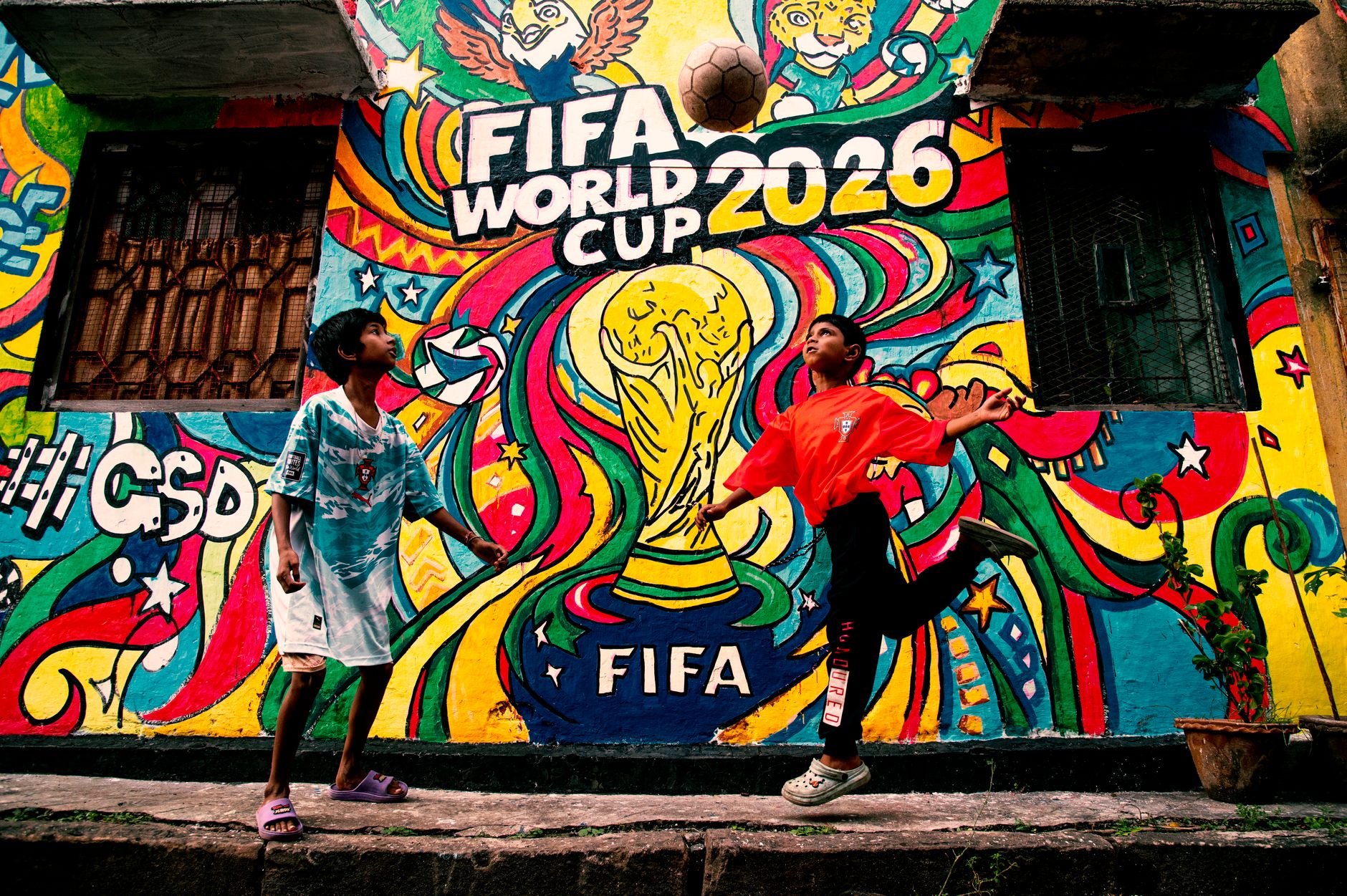
Photo by Anirban Das on Pexels
I'll be honest with you: the number 2026 looks simple, but the year is not. It touches a World Cup with 48 teams, a confirmed 2.8% Social Security COLA, and an MLB draft class whose development timelines remain uncertain. Search results often throw these subjects into one noisy bucket. That is understandable, but it is not very useful for a reader who wants a clean answer. This guide separates verified facts from assumptions, then explains how Goal Moments turns match data into more disciplined FIFA World Cup analysis. Kindly treat it as a framework, not a crystal ball. Football remains football. The ball has never signed a spreadsheet.
Would you like a more focused 2026 tournament overview?
Myth 1: Does 2026 guarantee accurate predictions? — debunked
No, 2026 cannot guarantee accurate match predictions because football outcomes contain substantial variance, even when teams have superior rankings, squad depth, or recent form. A data model can estimate probability, but it cannot remove injuries, red cards, finishing variance, weather, travel fatigue, or tactical surprises from a FIFA World Cup match.
The first distinction is between forecasting and certainty. FIFA rankings, expected goals, possession, shot quality, pressing efficiency, set-piece production, and goalkeeper performance can improve an estimate, but each metric has limits. A team averaging 1.80 expected goals per match may still lose 1–0 if its finishing collapses and the opponent scores from one transition. That is not a model failure by itself; it is the natural distribution of a low-scoring sport. According to FIFA’s official World Cup information, the 2026 tournament is scheduled across Canada, Mexico, and the United States, creating a geographic environment in which travel and venue conditions matter. Therefore, Goal Moments should present probabilities, confidence levels, and assumptions rather than dramatic guarantees.
A responsible match preview should normally separate at least five evidence layers:
- Baseline strength: FIFA ranking, Elo-style rating, and competitive results.
- Current form: the latest 5 to 10 matches, adjusted for opponent quality.
- Availability: injuries, suspensions, rotation, and squad announcements.
- Tactical fit: pressing, defensive line, transition speed, and set pieces.
- Context: venue, climate, travel distance, rest days, and match importance.
This method provides more information than simply writing “Team A is in better form.” It also creates an audit trail. If a prediction changes after a striker’s injury or a formation switch, the reader can see why. In my experience watching numbers late at night, that transparency is more valuable than pretending the first forecast was perfect. For related methodology, please see our [Internal Link: FIFA World Cup prediction guide].
Myth 2: Is the 48-team World Cup format automatically easier to predict? — partially true
The 2026 World Cup will feature 48 teams, but the larger field does not automatically make the competition easier or harder to predict. More teams increase the number of possible matchups, while the group-stage structure and qualification paths create new strategic incentives that models must account for.
The expanded tournament is a structural change, not merely a larger version of Qatar 2022. Canada, Mexico, and the United States will host matches across multiple locations, and that means a team’s route may involve different travel demands and climatic conditions. A European team playing in a cooler northern venue faces a different preparation problem from a squad operating in a hot, humid environment. Meanwhile, an experienced manager may value controlled possession early in the group stage because goal difference and late-match game states can become important. The data point is not “48 equals chaos”; it is that the number of variables has increased. Wikipedia’s 2026 overview provides a useful reference for the tournament’s host countries and expanded format.
A practical 2026 tournament model should track:
- Group-stage points and goal difference.
- Rest intervals between matches.
- Stadium location and estimated travel burden.
- Starting-lineup continuity.
- Set-piece goals for and against.
- Performance against opponents using similar tactics.
- Late substitutions and game-state changes.
One useful, less obvious insight is that early tournament predictions may overweight reputation because sample sizes are small. A famous team can dominate media coverage after one strong performance, while a less celebrated side may generate better shot quality over 180 minutes. That is why Goal Moments should compare process indicators with results. If a 2–0 win came from 0.65 expected goals and two unusual deflections, the scoreline deserves caution. If a 1–1 draw came with 2.10 expected goals and 18 penalty-area entries, the underlying performance may be stronger than the result suggests.
Ready to compare tournament factors more systematically?
Myth 3: Does every 2026 number describe the World Cup? — flat-out false
No, many prominent 2026 figures belong to unrelated subjects, including United States Social Security and the Major League Baseball Draft. A correct 2026 article must label each statistic by institution, country, and subject instead of treating the year itself as evidence.
The Social Security Administration’s official 2026 fact sheet states that beneficiaries and Supplemental Security Income recipients receive a 2.8% COLA. The employee Social Security and Medicare tax rate remains 7.65%, while the maximum taxable Social Security earnings amount rises from $176,100 in 2025 to $184,500 in 2026. The full-retirement-age maximum monthly benefit increases from $4,018 to $4,152. These numbers matter to American households, but they do not predict whether Brazil will defeat Germany or whether a host nation will progress from its group. The Social Security Administration 2026 COLA fact sheet is the authoritative source for those figures.
The same separation applies to baseball. MLB reporting on the 2026 Draft discusses which prospects could reach the majors quickly, but development depends on signing status, health, position, minor-league performance, and organizational decisions. The source notes that no player from the 2025 class had reached the majors at the time of publication, while six players from the 2024 Draft debuted before the first anniversary of their selection. That is a useful timeline comparison, not a guarantee for every 2026 pick. Cole Carlon, a left-handed pitcher selected 39th overall by the Toronto Blue Jays, was identified as one candidate for a relatively quick rise, but projection is not confirmation.
Here is the clean data split:
- FIFA World Cup: teams, fixtures, venues, tactics, player form, and tournament probabilities.
- Social Security: United States benefits, tax thresholds, SSI standards, and retirement rules.
- MLB Draft: prospect selection, signing, development, and major-league timelines.
- Goal Moments: football-focused predictions, tactical context, and player-stat coverage.
One information-gain point deserves attention: publishing date is part of data quality. A Social Security threshold can change annually, while a squad injury can change within hours. A 2026 article should display the source date beside volatile information, particularly when discussing player availability or tournament odds. That small operational habit prevents stale numbers from masquerading as current analysis.
What actually works for 2026 analysis?
A reliable 2026 analysis works by combining official sources, transparent assumptions, matchup-specific statistics, and disciplined risk controls. Goal Moments is most useful when readers use its FIFA World Cup content to understand scenarios, not to outsource judgment.
Begin with source verification. FIFA should be used for tournament rules and official competition information. National football associations and club announcements are stronger sources for squad news than anonymous social posts. For American retirement figures, use the Social Security Administration rather than a secondary infographic. For baseball prospect information, consult MLB Pipeline or official MLB reporting. As the Social Security fact sheet explains, “Social Security beneficiaries and Supplemental Security Income (SSI) recipients will receive a 2.8 percent COLA for 2026.” The wording matters because eligibility and program rules still apply; a headline number is not a universal payment promise.
Next, create a simple evidence table before forming a view:
| Category | Useful 2026 indicator | Why it matters |
|---|---|---|
| Attack | Expected goals per 90 | Measures chance quality |
| Defence | Shots conceded in the box | Tests defensive protection |
| Pressing | High turnovers | Indicates pressure effectiveness |
| Availability | Minutes missed | Estimates lineup disruption |
| Context | Rest and travel days | Captures tournament conditions |
| Set pieces | Goals from dead-ball situations | Identifies repeatable edges |
A second practitioner-level insight is that the “best team” and the “best matchup” are not identical. A possession-heavy team may be excellent overall but uncomfortable against a compact opponent that attacks the channels. Conversely, a high-pressing side may look dominant against slow buildup but struggle when the opposing goalkeeper consistently bypasses the first pressure line. Therefore, Goal Moments should discuss tactical interaction, not only rankings. For deeper reading, see our [Internal Link: team tactics and formation analysis].
The final step is calibration. Record the pre-match expectation, the confidence level, and the reason for the selection. After the match, compare the process with the outcome. If the predicted team created 2.00 expected goals but lost through a late penalty, the forecast may have been directionally sound but unlucky. If it won despite producing fewer chances, the result should not automatically validate the reasoning. This post-match audit is less glamorous than a bold headline, but it reduces confirmation bias by forcing the analyst to count misses as carefully as wins.
Want to follow the numbers without overreacting to one result?
What should readers ignore in 2026?
Readers should ignore guaranteed-win language, unexplained “inside information,” outdated injury lists, and statistics stripped from their sample size. These signals are especially dangerous when a website presents gambling-related content, because certainty can encourage decisions that the underlying evidence does not support.
Please also ignore tiny samples presented as permanent truths. A player’s two goals in three matches may be meaningful, but it is not enough to establish a new finishing level. A team’s 70% possession in one match may reflect the opponent’s deliberate strategy rather than dominance. Similarly, the 2.8% Social Security COLA is an official annual adjustment, but it should not be confused with a full household budget increase because housing, healthcare, taxes, and personal expenses vary by beneficiary. The Consumer Price Index explanation from the U.S. Bureau of Labor Statistics can help readers understand why inflation measures do not perfectly mirror every individual’s spending pattern.
Use this quick filter before trusting a 2026 claim:
- Is the source named and linked?
- Is the publication or update date visible?
- Does the statistic have a defined sample?
- Are injuries and lineup changes current?
- Does the conclusion describe probability rather than certainty?
- Are legal and age restrictions clear in the relevant market?
- Is there a fixed personal budget and a stopping point?
For football fans, another commonly overlooked issue is roster timing. A prediction written before the final FIFA squad announcement may be structurally useful but incomplete. A starting goalkeeper’s absence can alter buildup quality, defensive confidence, and set-piece organization in ways that a generic team rating will not immediately capture. The responsible approach is to revisit the preview when official squads, venue assignments, and confirmed lineups become available. If you participate in sports-related entertainment, please follow local law, use licensed services where required, and never treat analysis as financial advice.
How can Goal Moments improve your 2026 World Cup routine?
Goal Moments can improve a 2026 World Cup routine by organizing match predictions, tactical notes, player statistics, and tournament updates in one football-focused workflow. Its value is highest when readers use repeated evidence checks across several matches rather than reacting to isolated headlines.
A sensible routine can be completed in four stages:
- Before the match: review team news, recent performance, tactical setup, and rest.
- During the match: monitor changes in shape, pressing intensity, and substitutions.
- After the match: compare expected goals, shots, field position, and game state.
- Before the next decision: update the forecast only when new evidence justifies it.
The routine also improves search efficiency. Instead of searching “2026 prediction” as if one answer exists, narrow the question to “2026 World Cup team tactics,” “player expected goals,” “host-country travel,” or “confirmed squad news.” Specific questions produce more useful evidence. [Internal Link: 2026 World Cup match predictions] and [Internal Link: player statistics explained] can serve as natural next steps for readers building a repeatable process.
I'll be honest with you: no model can make uncertainty disappear. It can, however, make uncertainty visible. That is the real advantage of data-led coverage from Goal Moments: readers can see the variables, challenge the assumptions, and update their view when the facts change. The year 2026 will produce plenty of noise. A calm, source-checked process is a modest edge, but modest edges are usually the ones that survive contact with reality.
Please review the latest football coverage before planning your tournament routine.
Frequently Asked Questions
Q: What is the most important confirmed 2026 World Cup fact?
A: The most important structural fact is that the FIFA World Cup will feature 48 teams and be hosted by Canada, Mexico, and the United States. The expanded field changes group-stage incentives, travel planning, and the number of possible matchups. Readers should confirm fixtures, venues, and tournament rules through FIFA because schedules and operational details can be updated.
Q: How should I evaluate a 2026 World Cup prediction?
A: Evaluate a prediction by checking its sources, update date, statistical sample, team news, and tactical reasoning. Strong analysis normally includes expected goals, shot quality, defensive actions, rest, travel, and confirmed availability rather than relying only on FIFA ranking. You should also record confidence separately from the prediction, because a 55% estimate is not equivalent to certainty.
Q: What is the difference between FIFA World Cup data and the 2026 Social Security figures?
A: FIFA World Cup data measures football competition factors, while the 2026 Social Security figures describe United States benefit and tax rules. The Social Security Administration confirmed a 2.8% COLA, a $184,500 maximum taxable earnings limit, and a $4,152 maximum monthly benefit for a worker retiring at full retirement age. None of those figures predicts a football result.
Q: Is the 2026 World Cup easier to predict because there are 48 teams?
A: The 48-team format does not automatically make the tournament easier to predict. It creates more matchups and strategic scenarios while also increasing the importance of travel, venue conditions, rest, and goal difference. A useful model should compare tactical matchups and process statistics rather than assume that tournament size alone determines predictability.
Q: How can I get started with Goal Moments for the 2026 World Cup?
A: Start by selecting one match, reading the team-news and tactical context, and then checking the relevant player statistics before forming an opinion. Goal Moments focuses on FIFA World Cup predictions, formations, player data, and tournament coverage for fans following 2026. Begin with a small tracking sheet containing the prediction, confidence, key evidence, and post-match result.
Q: What should I do if a 2026 prediction appears outdated?
A: Treat an outdated prediction as historical analysis and check current official information before relying on it. Verify the latest FIFA updates, national-team announcements, injuries, suspensions, venue details, and confirmed lineups. If the underlying assumptions changed, discard the old conclusion rather than adjusting it emotionally to fit the new facts.
Q: Is sports analysis a guarantee of profit?
A: Sports analysis is not a guarantee of profit and should never be presented as one. Probability estimates can be wrong because of variance, incomplete information, officiating, injuries, and unexpected tactical decisions. If you choose to participate in gambling-related entertainment, follow local regulations, use licensed operators where applicable, set a strict budget, and stop when that limit is reached.
For continued 2026 football coverage, please explore Goal Moments and keep your decisions evidence-led.